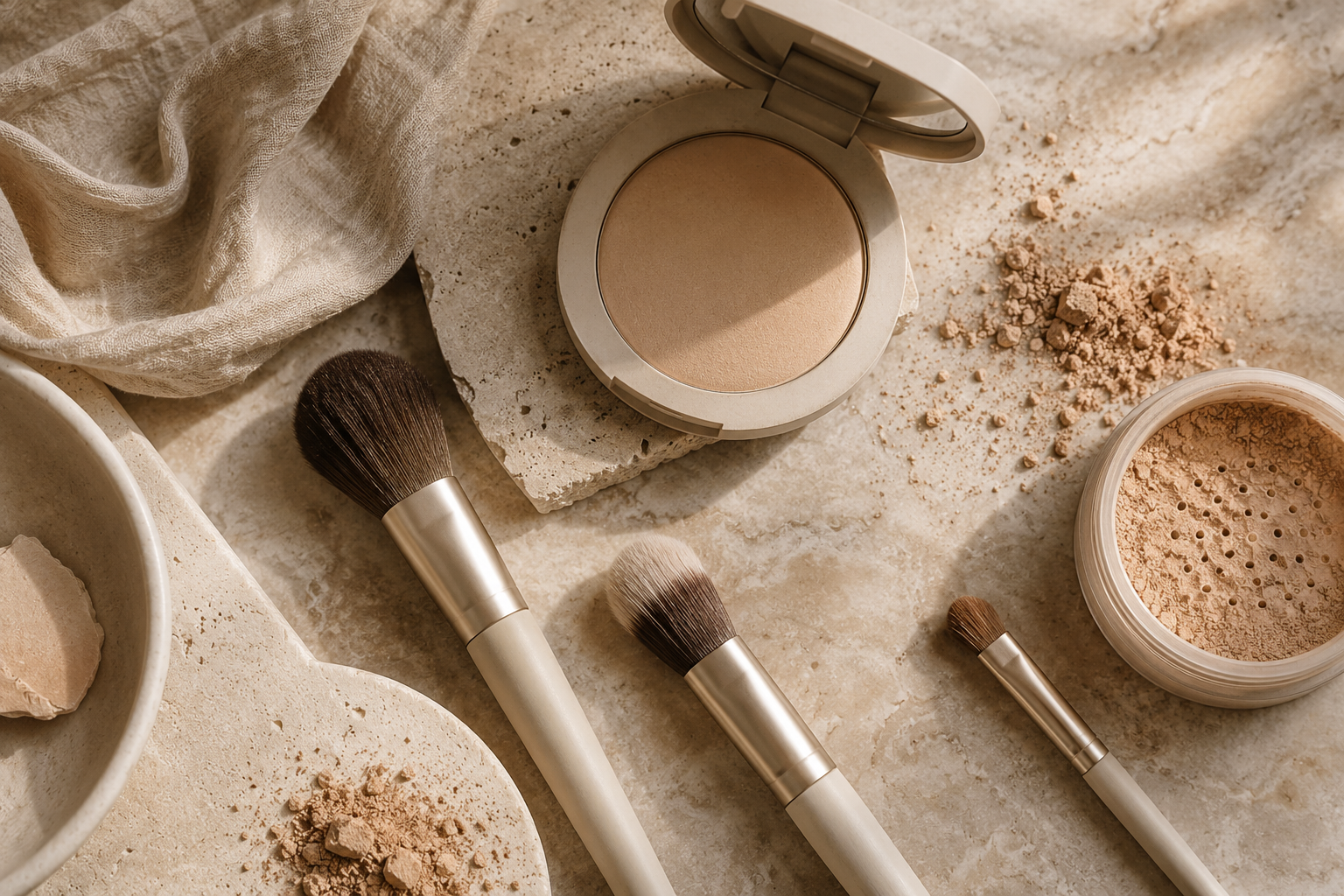
Makeup transferring to clothes is not always a bad foundation problem. It is usually a friction problem: too much product near the neckline, skincare that stayed slick, foundation sitting on top of SPF, powder placed everywhere except the rub zones, or setting spray being used while the base is still wet.
The transfer-proof makeup routine is not about making makeup behave like paint. Real life has collars, masks, phones, glasses, hands, hugs, and hair. The smarter goal is to make the base thinner, drier at contact points, and easier to touch up without adding more bulk.
Quick Verdict
In This Guide
Why Makeup Transfers
The foundation layer is too thick for friction. The areas that touch fabric or accessories should have the thinnest coverage on your face. If the neck, jaw, upper lip, and nose get a full foundation layer, they have more pigment to rub off.
Skincare or SPF stayed slippery. Foundation transfers faster when it is sitting over a wet-feeling surface. Let sunscreen dry, then blot excess shine before primer or foundation.
Powder is not going where contact happens. Powdering the center of the cheek does little for shirt collars, mask edges, phone screens, nose pads, or the side of the jaw.
Setting spray is being asked to do the entire job. Spray helps finish the routine, but it works better when the base underneath is already thin, dry to the touch, and powdered in strategic zones.
Transfer vs Melting vs Oxidation
| Problem | What You See | Main Cause | Fix First |
|---|---|---|---|
| Transfer | Foundation on collars, masks, phones, or glasses | Friction plus excess product | Friction-zone powder |
| Melting | Base slides, streaks, or breaks in heat | Sweat, oil, and wet layers | Sweat-proof routine |
| Oxidation | Foundation turns orange or darker after wear | Shade, undertone, oil, or formula shift | Oxidation routine |
| Cakiness | Texture looks dry, heavy, or powdery | Too much base or powder | Smooth-base routine |
| Nose separation | Foundation breaks around nostrils or pores | Oil, SPF slip, or primer conflict | Nose-separation routine |
Clothes, Mask, Phone, and Glasses Friction Zones
| Zone | Why It Transfers | Routine Adjustment | Product Lane |
|---|---|---|---|
| Collars and necklines | Fabric rubs the jaw, neck, and chin | Use less foundation near the neckline and powder only where fabric touches | Loose powder |
| Masks | Heat, moisture, and repeated pressure move base | Keep coverage thin under the mask line, then powder and spray after foundation dries down | Transfer-resistant spray |
| Phone screens | Cheek and jaw makeup meets pressure and oil | Press powder at the side of the face and blot phone-contact shine before calls | Matte spray |
| Glasses | Nose pads lift foundation and collect oil | Prime lightly, use very little foundation, and press powder around the pads | Grip primer |
| Hands, hugs, hair | Casual touching moves pigment before you notice it | Set the jaw, temples, and outer cheeks with a light hand | Event spray |
The Transfer-Proof Base Routine
1. Put on your outfit first when possible. If a tight neckline will scrape your jaw, dress before foundation. When that is not possible, protect the collar while changing and keep foundation off the neck.
2. Let skincare and SPF settle. Apply sunscreen, wait until the surface feels less slick, then press a tissue over the T-zone, jaw, and neck-adjacent areas.
3. Use less foundation in rub zones. Apply coverage where you need it visually, then sheer it out near the jaw, chin, upper lip, and sides of the nose.
4. Press before powder. Use a sponge to remove excess foundation from the places that touch fabric or accessories. Powder should set a thin layer, not hide a heavy one.
5. Powder the friction map. Press powder into the collar line, jaw corners, upper lip, nostrils, chin, mask edge, phone side, and glasses pads. Leave dry cheeks more flexible.
6. Spray after powder, then wait. Mist setting spray in an even veil and let it dry fully before putting on a mask, taking a call, hugging, or pulling clothes over your face.
7. Touch up by removing movement first. Blot oil, press lifted base flat, then add powder only where transfer is still happening.
Powder and Setting Spray Strategy
Powder is the control step. Setting spray is the finishing step. If you only spray a damp or overloaded foundation layer, the makeup can still rub off onto fabric. If you only powder heavily, the base may look dry and still crack where friction happens.
For daily transfer, powder first in small presses, then use a lighter matte spray. For events, photos, masks, and high-contact days, move to a stronger setting spray after the powder layer has settled. For a deeper decision tree, see the full setting powder vs setting spray guide.
Product Picks by Problem
1. Best Primer for Rub Zones: e.l.f. Poreless Putty Primer
Primer · pore-blur · targeted grip
Use a tiny amount around the nose, chin, upper lip, and jaw corners before foundation. The key is restraint: too much primer can add more slip, especially over sunscreen.
Best for: glasses pads, nose transfer, chin transfer, and pores where foundation moves first.
Check e.l.f. on Amazon2. Best Everyday Matte Base: Maybelline Fit Me Matte + Poreless
Foundation · matte finish · drugstore routine
This is the everyday base lane when dewy foundation leaves marks on shirts or phones. Apply it thinly, then build coverage only where your skin needs more evening out.
Best for: normal-to-oily skin, shine-prone base routines, and foundation that transfers because it stays too radiant.
Check Maybelline on Amazon3. Best Long-Wear Foundation Lane: Revlon ColorStay Combination/Oily
Foundation · long-wear positioning · combination/oily lane
Use this when your normal foundation looks good at first but rubs off on collars, masks, or hands. Keep the neckline and jaw sheer so the formula has less pigment to leave behind.
Best for: longer days, oilier T-zones, and routines where transfer resistance matters more than glow.
Check Revlon on Amazon4. Best Friction-Zone Powder: Laura Mercier Translucent Loose Setting Powder
Loose powder · targeted setting · transfer control
Press this into the exact contact points: collar line, jaw corners, upper lip, chin, nose pads, and phone side. Avoid sweeping it everywhere if your cheeks get dry or textured.
Best for: clothes transfer, mask edges, phone marks, and foundation that needs targeted control before spray.
Check Laura Mercier on Amazon5. Best Matte Spray for Daily Wear: NYX Matte Finish Setting Spray
Setting spray · matte finish · accessible routine
Use NYX when transfer and shine show up together. It makes the most sense after powder, especially around the T-zone, jaw, and phone-contact side of the face.
Best for: oily zones, everyday matte finishing, and routines that need a practical spray step after powder.
Check NYX on Amazon6. Best Event Spray: Urban Decay All Nighter
Setting spray · long-wear routine · photos and events
All Nighter is the stronger final step when makeup needs more hold through photos, warmth, and longer wear. It performs best over a thin, powdered base.
Best for: weddings, date nights, long workdays, and situations where phone and collar transfer would be obvious.
Check Urban Decay on Amazon7. Best Transfer-Resistant Spray Lane: One/Size On 'Til Dawn
Setting spray · transfer-resistant positioning · high-contact days
This is the spray lane I would test for mask, phone, collar, and hug-prone makeup. Use it after powder, then give it time to dry before anything touches your face.
Best for: high-contact days, masks, event makeup, and base routines where transfer is the main complaint.
Check One/Size on Amazon8. Best Thin-Layer Tool: Real Techniques Miracle Complexion Sponge
Makeup sponge · thin layers · touch-up control
A damp sponge helps press excess foundation out of friction zones before powder. Keep the clean side for later touch-ups so you can press lifted makeup flat before adding anything else.
Best for: thinning foundation, smoothing product overload, and reducing the amount of base available to rub off.
Check Real Techniques on AmazonTouch-Up and Removal Strategy
Blot first. Oil, sweat, and moisture make transfer worse. Press with tissue or blotting paper before powder.
Press the edge flat. If foundation has lifted along the collar, mask line, or nose pads, use a sponge to smooth the edge before adding product.
Add powder in dots, not a veil. Target the exact place that is transferring. More powder all over the face can make the makeup look heavier without fixing the friction point.
Remove collar marks quickly. For washable clothes, lift pigment with a makeup-removing wipe or micellar water on a cotton round before laundering. Test delicate fabric somewhere hidden first.
Clean the contact object. Phone screens, glasses pads, mask edges, and jacket collars can re-transfer old pigment back onto fresh makeup.
TikTok/Reels Hook
The hook: "Your foundation is transferring because you are setting the pretty parts, not the friction parts." Film a white-shirt test with one side powdered only through the T-zone and the other side powdered along the collar line, jaw, phone side, nose pads, and mask edge. Keep the conclusion honest: transfer can be reduced, not magically erased.
FAQ
Usually because the foundation layer is too thick near fabric, skincare or SPF is still slippery, or powder and setting spray are not focused on the zones that actually touch clothes.
Use less foundation near the neckline, dress before makeup when possible, press powder along the collar-contact line, mist setting spray after powder, and let it dry fully.
It can help reduce transfer when the base is already thin and powdered. Setting spray cannot make heavy foundation friction-proof on its own.
Use less than you think. Blend leftover foundation lightly down the jaw if needed, but avoid building full coverage on areas that touch collars.
Powder usually matters first because it controls contact zones. Setting spray is the final step that helps the finished layers sit together.
Sources Checked
Product positioning and application context were checked against official pages for e.l.f. Poreless Putty Primer, Maybelline Fit Me Matte + Poreless Foundation, Revlon ColorStay Combination/Oily Foundation, Laura Mercier Translucent Loose Setting Powder, NYX Matte Finish Setting Spray, Urban Decay All Nighter Setting Spray, One/Size On 'Til Dawn Setting Spray, and Real Techniques Miracle Complexion Sponge.