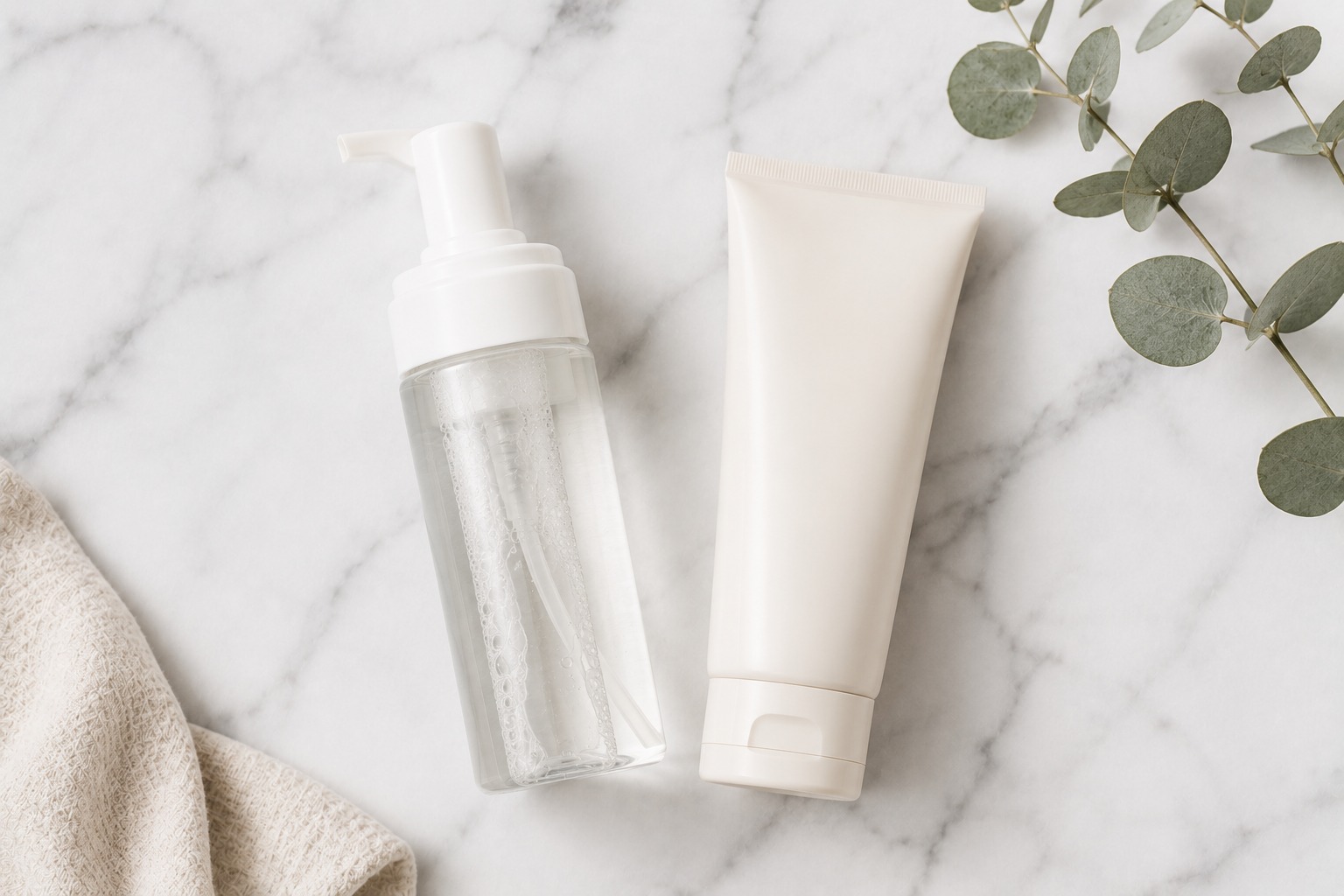
CeraVe Foaming vs Hydrating Cleanser: Which One Is Right for You?
CeraVe is one of the best-known drugstore cleanser brands. But picking the wrong one between their two best-sellers is one of the most common skincare mistakes. This breakdown makes the choice simple.
CeraVe is one of the most visible drugstore cleanser brands for barrier-focused routines. Their two best-selling cleansers -- the Foaming Facial Cleanser and the Hydrating Facial Cleanser -- both contain ceramides and hyaluronic acid, but they are designed for very different skin types.
Picking the wrong one is one of the most common skincare mistakes. The Foaming cleanser on dry or sensitive skin causes tightness and potential barrier disruption. The Hydrating cleanser on oily skin can leave it feeling incompletely cleansed. This breakdown makes the choice simple.
The Two Products: At a Glance
CeraVe Hydrating Facial Cleanser
Cream and lotion texture with no foam. Rinses clean without stripping and leaves a light moisturizing film. Key ingredients: ceramides, hyaluronic acid, niacinamide, and glycerin -- the same core as the Foaming version but with added glycerin for extra moisture protection. The safer choice for anyone with skin concerns. If in doubt, choose this one.
Check Price on AmazonCeraVe Foaming Facial Cleanser
Foaming gel texture that removes excess oil, SPF, and daily buildup more thoroughly than the Hydrating version. Contains sodium lauroyl lactylate, a foaming agent that produces a more aggressive cleanse. Good for AM use after a night of only moisturizer and SPF. Better for post-workout cleansing when oil and sweat buildup is heavier.
Check Price on AmazonRound-by-Round: Which One Wins for Your Skin Type
Round 1: Dry and Normal Skin
CeraVe Hydrating Facial Cleanser
The Hydrating cleanser's non-foaming formula does not activate the surfactants that strip natural oils. Ceramides and glycerin maintain the skin's moisture barrier throughout the cleansing step. Dry skin is particularly vulnerable to cleanser-induced barrier disruption -- the Hydrating formula is specifically designed to prevent this.
Check Price on AmazonCeraVe Foaming Facial Cleanser
The foaming agent and more aggressive cleansing action are unnecessary and potentially harmful for dry skin. Most dry-skin users report a tight, stripped feeling after using the Foaming version, which is a sign of barrier disruption.
Check Price on AmazonRound 2: Oily and Acne-Prone Skin
CeraVe Hydrating Facial Cleanser
Still non-comedogenic and won't clog pores. But the moisturizing film it leaves behind can feel insufficient for oily skin that wants a more thorough cleanse, especially AM after a night of heavier oils and secretions.
Check Price on AmazonCeraVe Foaming Facial Cleanser
Cuts through excess oil, SPF, and daily buildup more thoroughly. Oily skin can tolerate the foaming agent without the tightness or barrier disruption that dry skin experiences. Better for post-workout use and AM cleansing after a heavy overnight moisturizer or slugging routine.
Check Price on AmazonRound 3: Sensitive Skin (Including Rosacea and Eczema-Adjacent)
CeraVe Hydrating Facial Cleanser
No foaming agent means no risk of sodium lauroyl lactylate irritating reactive skin. Dermatologists specifically recommend the Hydrating cleanser for rosacea-prone and eczema-adjacent skin. The minimal-friction, non-lathering formula reduces the mechanical and chemical stress on already-reactive skin during cleansing.
Check Price on AmazonCeraVe Foaming Facial Cleanser
Sodium lauroyl lactylate can trigger or worsen rosacea flares and aggravate eczema-prone skin. The more aggressive cleansing action is not suitable for compromised or reactive skin. Avoid for these skin types.
Check Price on AmazonThe Verdict
The Hydrating cleanser is the lower-friction starting point for many dry, normal, sensitive-feeling, and mild combination routines. If you are unsure which skin type you have, start there and patch test. It is less stripping than the Foaming cleanser, but any cleanser can still bother compromised or actively flaring skin.
The Foaming cleanser is better for oily skin or as a morning cleanse after a night of only moisturizer and SPF -- when you have not applied heavy makeup or treatment products and just need to clear overnight oil buildup. It is specifically not suitable for dry, sensitive, rosacea-prone, or eczema-adjacent skin.
Many people with combination skin keep both and rotate: the Foaming in the morning after an oily night, and the Hydrating in the evening after removing sunscreen, makeup, and treatment products.
FAQ: CeraVe Foaming vs Hydrating Cleanser
Which CeraVe cleanser is best for oily skin?
CeraVe Foaming Facial Cleanser is the better choice for oily and acne-prone skin. Its gel-foam texture removes excess oil, SPF, and daily buildup more thoroughly than the Hydrating version. Best for AM use or post-workout cleansing.
Which CeraVe cleanser is best for dry skin?
CeraVe Hydrating Facial Cleanser is the clear choice for dry skin. It rinses clean without stripping and leaves a light moisturizing film. The non-foaming formula prevents the tight, stripped feeling that foaming cleansers cause on dry skin types.
Can you use CeraVe Foaming Cleanser every day?
Yes, if your skin is oily or combination. For dry or sensitive skin, daily use of the Foaming version can cause tightness and barrier disruption. Dry and sensitive skin types should use the Hydrating Facial Cleanser instead, or limit the Foaming to AM use only.
Is CeraVe Hydrating Cleanser good for acne?
Yes. CeraVe Hydrating Facial Cleanser is non-comedogenic and contains ceramides that help protect the skin barrier -- over-cleansing and barrier disruption are common acne triggers. It is a good choice for acne-prone skin that also tends toward dry or sensitive. For oily acne-prone skin, the Foaming version may cleanse more thoroughly.
What is the difference between CeraVe Foaming and Hydrating cleanser?
The key difference is the foaming agent. The Foaming Cleanser contains sodium lauroyl lactylate, which creates a gel-foam lather that cuts through oil more aggressively. The Hydrating Cleanser has no foaming agent -- it has a cream texture that rinses clean without stripping, making it gentler and more suitable for dry, normal, and sensitive skin. Both contain ceramides and hyaluronic acid, but the Hydrating version also includes glycerin for added moisture protection.