Quick Verdict
In This Article
The Combination Skin Reality -- Two Problems, One Face
Combination skin is the most common skin type in adults -- an oily T-zone (forehead, nose, chin) paired with normal-to-dry cheeks and sometimes flaky patches around the mouth or eyes. It's also the hardest skin type to formulate a single routine for, because products that work on the T-zone often over-dry the cheeks, and products that hydrate the cheeks often make the T-zone look like an oil slick by noon.
The solution isn't a single universal serum. It's picking the right two or three serums that either (a) target the common root issues both zones share, or (b) can be zone-applied to different parts of the face. Both approaches work, and the best combination-skin routines use both.
Three ingredient categories handle 80% of combination skin's needs: niacinamide (regulates oil in the T-zone while supporting the cheek barrier), hyaluronic acid (weightless hydration that doesn't trigger oiliness), and salicylic acid (BHA) (zone-applied to the T-zone 2-3x a week for blackhead prevention). The four other serums on this list round out specific use cases.
Quick Comparison
| Award | Product | Price | Best Feature | |
|---|---|---|---|---|
| Best Overall | The Ordinary Niacinamide 10% + ZincTop Pick | ~$7 | Regulates T-zone oil, calms cheeks | View |
| Best Brightening | TruSkin Vitamin C Serum | ~$22 | 20% vit C + vit E + HA | View |
| Best Hydration | The Ordinary Hyaluronic Acid 2% + B5 | ~$9 | Three HA molecular weights for layered hydration | View |
| Best Zone-Apply | Paula's Choice 2% BHA Liquid | ~$34 | Salicylic acid for T-zone only | View |
| Best K-Beauty | COSRX Advanced Snail 96 Essence | ~$25 | Snail mucin for repair + gentle exfoliation | View |
| Best for Under-Eyes | The Ordinary Caffeine Solution 5% + EGCG | ~$8 | De-puffs + brightens dark circles | View |
| Best Anti-Aging | CeraVe Resurfacing Retinol Serum | ~$19 | Encapsulated retinol + ceramides for gentle anti-aging | View |
Our Top 7 Serums for Combination Skin
1. The Ordinary Niacinamide 10% + Zinc 1% -- Best Overall
Niacinamide at 10% is the single best active for combination skin because it does two things other serums struggle to do in the same bottle: it regulates sebum production in the oily zones and strengthens the barrier in the dry zones. That dual action is exactly what combination skin needs when it feels oily and dehydrated at the same time. Add zinc PCA and you get additional oil-regulation with a mild anti-inflammatory effect.
At $7, it's also the cheapest high-performing serum on Amazon, which matters because you'll likely go through a bottle every 2-3 months.
2. TruSkin Vitamin C Serum -- Best Brightening
TruSkin is the most-reviewed vitamin C serum on Amazon with good reason -- it's formulated with 20% sodium ascorbyl phosphate (a stable derivative of vitamin C), vitamin E, hyaluronic acid, and botanical extracts in a lightweight non-greasy texture. For combination skin specifically, the formula is balanced enough to use on both cheeks and T-zone without triggering oiliness.
Use in the morning, under moisturizer and sunscreen. Vitamin C multiplies the effectiveness of your SPF and gives combination skin the even-toned glow that's otherwise hard to achieve with differing oil levels across the face.
3. The Ordinary Hyaluronic Acid 2% + B5 -- Best Hydration
Combination skin needs hydration -- cheeks especially -- without added oils or heavy occlusives that could tip the T-zone into breakouts. Hyaluronic acid is the perfect solution: it binds water without adding any oil to the skin. The Ordinary's formulation uses three molecular weights of HA plus vitamin B5 (panthenol) for a layered hydration effect that penetrates beyond the surface.
Layer it on damp skin after cleansing, before other serums. Critical tip: if you apply it to completely dry skin, it can actually pull water out of your skin in low-humidity environments. Damp application avoids that entirely.
4. Paula's Choice 2% BHA Liquid Exfoliant -- Best Zone-Apply
Salicylic acid is oil-soluble, which is exactly what blackhead-prone T-zones need. Paula's Choice 2% BHA is the benchmark formulation -- properly pH-balanced at 3.2-3.8, green tea for anti-inflammatory support, and a thin liquid texture that layers invisibly. For combination skin, apply only to the T-zone with a cotton pad or fingertips 2-3 nights per week. Skip the cheeks.
Over-applying BHA to the cheeks is how combination-skin routines go wrong. The dry zones don't need chemical exfoliation at anything near that frequency.
5. COSRX Advanced Snail 96 Mucin Power Essence -- Best K-Beauty
Snail mucin is a humectant-rich ingredient complex that can support a cushioned, hydrated skin feel. For combination skin, COSRX's Advanced Snail 96 is useful because it adds lightweight hydration without the heavy finish that can overwhelm the T-zone.
The 96% snail mucin concentration comes in a light essence texture that absorbs quickly for many users. It can be used morning or night if your skin tolerates it, and it layers well with simple hydrating serums. Patch test if you are reactive or avoid snail-derived ingredients.
6. The Ordinary Caffeine Solution 5% + EGCG -- Best for Under-Eyes
Combination skin often has a fourth zone beyond T-zone and cheeks -- puffy, dark-circled under-eyes. Caffeine at 5% is the most evidence-backed topical for both puffiness (vasoconstriction reduces fluid retention) and dark circles (strengthens vessel walls). EGCG (from green tea) adds antioxidant protection. The Ordinary's formulation is both the cheapest and highest-concentration version on Amazon.
Apply 2-3 drops with your ring finger, patting gently around the orbital bone (not on the eyelid). Use AM before other eye products.
7. CeraVe Resurfacing Retinol Serum -- Best Anti-Aging
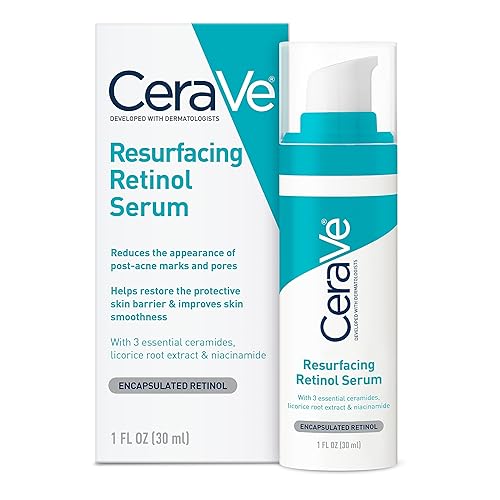
Combination skin users often put off retinol because they're afraid of over-drying their cheeks. The encapsulated retinol in CeraVe's Resurfacing Serum is a gentler-feeling mainstream option -- slow-release delivery may reduce irritation compared with harsher-feeling retinol formats while supporting visible texture and tone goals. Three ceramides, niacinamide, and licorice root make the formula especially combination-skin-friendly because they support the barrier while retinol does its work.
Use 2-3 nights a week initially, never on the same night as BHA. Apply after cleanser, before moisturizer.
The Zone Strategy -- Different Serums, Different Areas
The most effective combination-skin serum strategy isn't picking one product -- it's applying different products to different zones. Here's how to layer for maximum effect without over-treating any single area.
All-over AM: TruSkin Vitamin C (glow + environmental protection) → The Ordinary Hyaluronic Acid on damp skin (base hydration) → Niacinamide 10% (oil + barrier support).
T-zone only PM (2-3x/week): Paula's Choice 2% BHA on nose, forehead, chin after cleansing. Skip the cheeks entirely.
Cheek-focused PM: HA + snail essence on dry areas. Apply twice if skin is very dehydrated, pat in with damp palms.
All-over PM (retinol nights, 2-3x/week): CeraVe Resurfacing Retinol Serum. Follow with CeraVe PM moisturizer.
Under-eye every morning: Caffeine 5% before any other eye care.
Frequently Asked Questions
Combination skin needs lightweight water-based serums that deliver actives without adding heavy occlusives. Hyaluronic acid, niacinamide, BHA (salicylic acid), and vitamin C are ideal. Avoid heavy oil-based serums and anything with dimethicone high in the ingredient list.
Yes -- this is actually the most effective approach for combination skin. Apply hyaluronic acid or niacinamide all over, then layer a BHA on the T-zone only and a ceramide or peptide serum on the cheeks only.
Both -- they do different jobs. Niacinamide regulates oil production in the T-zone and reduces pore appearance. Hyaluronic acid hydrates the dry cheek areas without adding weight. The best routines include both.
Two to three at most per routine. More than that causes pilling and wastes product. A typical effective layering: AM = vitamin C + hyaluronic acid; PM = BHA (3x/wk) or niacinamide (other nights), then hyaluronic acid.
Serum always goes before moisturizer. Serums are thinner and deliver actives deeper into the skin; moisturizer sits on top and seals everything in. The only exception is facial oils -- those go last.